
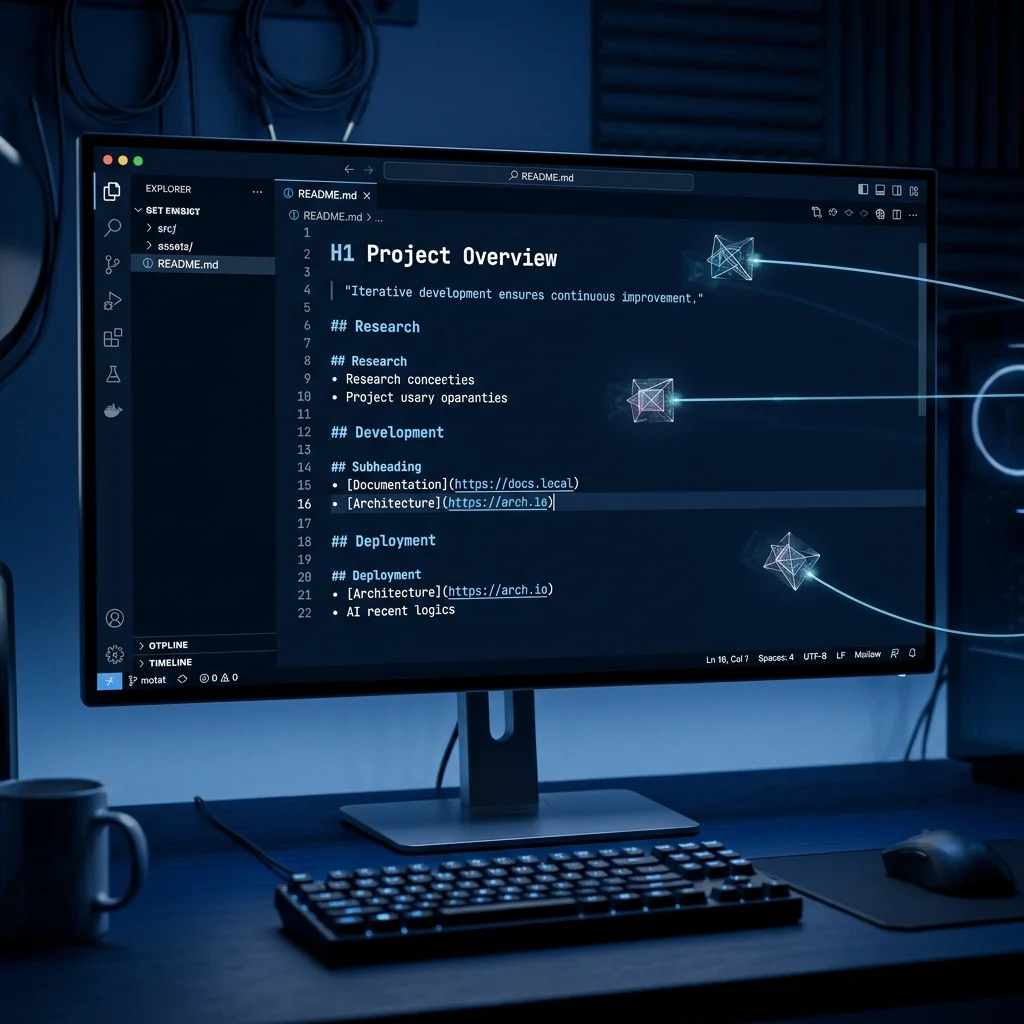
llms.txt is a structured Markdown file, served at your domain root (yoursite.com/llms.txt), that tells AI systems what your site is about, which pages are most important, and how to interpret your content. It was proposed by Jeremy Howard, founder of fast.ai, in September 2024 as a communication layer between websites and large language models, analogous to how robots.txt communicates with search engine crawlers.
Here is the honest status in September 2026: only 3.2% of websites have an llms.txt file (SEO Score Tools, 10,000-site analysis). 96.8% of the web provides zero structured guidance to AI systems about their content. Meanwhile, AI-generated search responses drive an estimated 15 to 25% of informational web traffic. The gap between preparation and opportunity is enormous, but the gap between hype and proven impact also needs honest framing.

llms.txt is not a magic switch for AI citations. Based on public information from OpenAI as of 2026, ChatGPT’s web search and citation behavior relies on a wider portfolio of signals, and llms.txt does not directly control ranking inside ChatGPT responses. What llms.txt does is provide AI crawlers with a clean, structured map of your most important content in a single request, useful when AI systems are building context about your site during inference, agentic tasks, or documentation retrieval. It’s one signal among many, worth implementing because it takes 30 minutes and costs nothing, but worth understanding clearly so you don’t overinvest expectations.
Key Takeaways
- llms.txt is a structured Markdown file at your domain root that tells AI crawlers what your site is about and which pages matter most, like a robots.txt for AI context rather than crawl access.
- Only 3.2% of websites have one. Early adopters have a structural advantage because they’re providing guidance that 96.8% of competitors aren’t.
- llms.txt is NOT a permission system. Crawl access is controlled by robots.txt. llms.txt provides context and guidance, not access rules.
- AI crawlers (GPTBot, ClaudeBot, PerplexityBot) have begun requesting llms.txt during inference to quickly map a site’s most relevant content.
- The primary proven use case today is developer documentation and AI coding tools (Cursor, Claude Code, MCP servers). For marketing content, it’s an emerging signal with directional but not yet definitive impact on AI citations.
- It takes 30 minutes to create and costs nothing. The effort-to-potential-upside ratio makes it worth implementing even given the honest limitations.
What Is llms.txt and Why It Matters in 2026
ChatGPT, Claude, Gemini, and Perplexity have limited context windows. They cannot read your entire website in one request. When an AI system encounters your site, whether during training, real-time search retrieval, or agentic tasks, it needs to know quickly which pages are the most important, what your site covers, and how your content is organized.
llms.txt answers that question in a single file. It provides a structured summary of your site that AI systems can consume in one request rather than crawling dozens or hundreds of pages to build the same understanding.
How it differs from robots.txt and sitemap.xml:
robots.txt controls access: which crawlers can visit which parts of your site. It says “you may or may not crawl these pages.” It does not explain what the pages contain or which ones are important.
sitemap.xml lists URLs for search engine crawlers to discover and index. It says “these pages exist.” It does not explain what they cover, how they relate to each other, or which ones are most important for understanding your business.
llms.txt provides context: a structured, human-readable summary that tells AI systems “this is what our site is about, these are the most important pages, and here’s how our content is organized.” It’s the only file that communicates meaning, not just structure.

All three work together. robots.txt controls the gate. sitemap.xml maps the territory. llms.txt explains the landscape.
Our technical SEO guide covers robots.txt configuration and sitemap management in detail.
The llms.txt File Format
The specification is deliberately simple. llms.txt uses structured Markdown with a minimal required format:
Required: An H1 title (the name of your site or project).
Recommended: A blockquote description summarizing what your site does in one to two sentences.
Optional but valuable: Sections with H2 headings organizing your key pages by topic, each containing linked page titles with brief one-line descriptions.
Here is the basic structure:
markdown
# Your Business Name
> One to two sentence description of what your business does
> and what your site covers.
## Core Services
– [Service Name](https://yoursite.com/service-page): One-line factual description.
– [Another Service](https://yoursite.com/another-service): One-line factual description.
## Key Resources
– [Guide Title](https://yoursite.com/guide): One-line factual description.
– [Another Guide](https://yoursite.com/another-guide): One-line factual description.
## About
– [About Us](https://yoursite.com/about): One-line factual description.
– [Contact](https://yoursite.com/contact): One-line factual description.
Critical formatting rules:
- The H1 title is the only strictly required element.
- Descriptions should be factual one-liners, not marketing copy. “Enterprise SEO services for US, Canada, UK, and European businesses” is correct. “The world’s most amazing SEO agency transforming businesses everywhere” is not, and is the most common mistake in llms.txt files.
- Every link must point to a live, crawlable page. Dead links in llms.txt actively degrade the guidance value.
- Do not dump your full sitemap into the file. The purpose is curation: the 15 to 30 most important pages, not every page on your site.
Real Example: AutiMark’s Own llms.txt (Annotated)

Here is a working example based on our own site structure. Every entry links to a real page and uses factual descriptions:
markdown
# AutiMark
> AutiMark is an SEO agency headquartered in Calgary, Alberta,
> serving businesses across the US, Canada, UK, and Europe.
> Services include AI SEO, content writing, on-page SEO,
> link building, and Smart SEO managed plans.
## Services
– [AI SEO](https://autimark.com/services/ai-seo/): AI search optimization including ChatGPT, Perplexity, Gemini, and Google AI Overview visibility.
– [Content Writing](https://autimark.com/services/content_writing/): SEO-optimized content production for blogs, service pages, and pillar guides.
– [On-Page SEO](https://autimark.com/services/on-page_seo/): Technical on-page optimization including schema markup, meta tags, and internal linking.
– [Link Building](https://autimark.com/services/link_building/): Editorial backlink acquisition from relevant, authoritative publications.
– [Smart SEO Plans](https://autimark.com/services/smart-seo/): Managed monthly SEO programs combining content, links, technical, and AI optimization.
## Key Guides
– [Schema Markup for SEO](https://autimark.com/schema-markup-for-seo/): Complete guide to implementing 8 schema types for Google and AI search.
– [E-E-A-T in SEO](https://autimark.com/eeat-in-seo/): How to build Experience, Expertise, Authoritativeness, and Trustworthiness signals.
– [Answer Engine Optimization](https://autimark.com/answer-engine-optimization/): 9-step method for getting cited by AI answer engines.
– [Generative Engine Optimization](https://autimark.com/generative-engine-optimization/): How to get recommended by ChatGPT, Perplexity, and Gemini.
– [AI Visibility](https://autimark.com/ai-visibility/): How to track and improve brand presence across AI search platforms.
## Company
– [About](https://autimark.com/about-us/): Agency background, team, and approach.
– [Case Studies](https://autimark.com/seo-case-studies/): Real client results across SaaS, eCommerce, and local businesses.
– [Pricing](https://autimark.com/pricing/): SEO packages from $799 to $4,999 per month.
– [Contact](https://autimark.com/contact/): Phone, email, and booking link.
Why this example works:
- The blockquote gives an AI system a complete picture of the business in four lines.
- Services are listed with factual, non-promotional descriptions.
- Key guides are curated (not every blog post, just the pillar pages) so the AI knows which content represents the deepest expertise.
- Company pages include pricing (useful for AI agents evaluating vendors) and case studies (useful for credibility assessment).
How to Create an llms.txt File: Step by Step
Step 1: Write Your H1 and Blockquote Summary
Your H1 is your brand name. Your blockquote is a two-to-four sentence factual summary of what your business does, who you serve, and where you operate. Write it like a Wikipedia introduction, not a sales pitch.
Step 2: Curate Your Key Pages
Select the 15 to 30 most important pages on your site, organized into logical sections. Prioritize:
- Service/product pages (what you sell)
- Pillar content (your deepest, most authoritative guides)
- Trust pages (about, case studies, testimonials, pricing)
- Contact/booking (how to reach you)
Do not include every blog post, every tag page, or every archive. The file’s value is curation, not completeness.
Step 3: Write Factual One-Line Descriptions
Each page gets a single sentence describing what it contains. Factual, specific, no adjectives. “Link building services focused on editorial placements from relevant publications” not “Our amazing industry-leading link building service.”
Step 4: Save as llms.txt and Upload to Your Domain Root
Save the file as plain text with the .txt extension. Upload to your domain root so it’s accessible at yoursite.com/llms.txt.
WordPress: Upload via SFTP to your root directory (the same directory as wp-config.php), or use a plugin that supports custom root files.
Static sites: Place the file in your public/build directory alongside robots.txt and sitemap.xml.
Step 5: Verify Access
After uploading, navigate to yoursite.com/llms.txt in a browser. The file should display as plain text. Verify it returns a 200 HTTP status code, not a redirect or error.
Check that your robots.txt doesn’t block AI crawlers from accessing the file. Add explicit Allow directives:
User-agent: GPTBot
Allow: /llms.txt
User-agent: ClaudeBot
Allow: /llms.txt
User-agent: PerplexityBot
Allow: /llms.txt
User-agent: OAI-SearchBot
Allow: /llms.txt
User-agent: Google-Extended
Allow: /llms.txt
Step 6: Set a Quarterly Review Cadence
Update your llms.txt when you publish major new content, retire a listed page, change pricing, restructure services, or launch new products. A quarterly review is the minimum cadence for most sites.
Our on-page SEO service includes llms.txt creation and maintenance as part of broader AI-readiness implementation.
llms.txt vs llms-full.txt
Some implementations include a companion file called llms-full.txt that contains the full text content of every page listed in llms.txt, concatenated into one file. This gives AI systems the actual content without needing to crawl each page individually.
The honest assessment: llms-full.txt is not part of the original specification. It emerged from the developer-tools community where AI coding assistants (Cursor, Claude Code) benefit from having full documentation in a single fetchable file. For marketing content, generating and maintaining an llms-full.txt adds complexity without proven citation benefit. Create one only if a specific tool you use documents that it reads llms-full.txt.
Common llms.txt Mistakes
Dumping your full sitemap. The file is meant to curate your most important pages, not list every URL. An llms.txt with 500 entries defeats the purpose: helping AI systems understand your site quickly.
Marketing copy in descriptions. “The ultimate, award-winning, industry-leading solution” tells an AI system nothing. “Email marketing automation for B2B SaaS companies, 50-500 employees” tells it everything. Factual beats promotional.
Dead links. Every URL in your llms.txt must return a 200 status code. A file full of 404s actively degrades the trust signal.
Blocking AI crawlers while serving llms.txt. If your robots.txt blocks GPTBot but your llms.txt tries to guide it, the block wins. Ensure the crawlers you want to reach your llms.txt are allowed in robots.txt.
Treating llms.txt as a substitute for real optimization. Publishing an llms.txt file on a site with thin content, no schema, and no authority signals does not produce AI citations. The file is a guide for AI systems that already have reason to crawl your site. It doesn’t create that reason.
Skipping the H1 and blockquote. The specification requires the H1 title. The blockquote summary is technically optional but practically essential, because it’s the first thing an AI system reads to understand what your site is.
Honest Limitations of llms.txt in 2026
Transparency here matters more than promotion.
No major AI platform has publicly confirmed that llms.txt directly influences citation ranking. OpenAI has not stated that GPTBot or OAI-SearchBot use llms.txt as a ranking signal for ChatGPT responses. Google has not confirmed Google-Extended uses it. Perplexity has not published documentation on llms.txt processing.
AI crawlers do request the file. Server logs show GPTBot, ClaudeBot, and PerplexityBot fetching llms.txt during inference on sites that serve it. The file is being consumed. Whether and how it influences citation selection is not publicly documented.
The primary proven use case is developer documentation. AI coding assistants (Cursor, Claude Code, Windsurf) and MCP servers explicitly fetch llms.txt to understand project documentation. This is where the file’s value is most clearly demonstrated.
For marketing content, treat it as one signal among many. llms.txt alone will not get you cited. Combined with strong schema, entity consensus, direct-answer content, and authoritative backlinks, it adds a structured contextual layer that helps AI systems understand your site faster. The effort-to-potential-upside ratio (30 minutes of work, zero ongoing cost) makes it worth implementing even with the honest limitations.
Practitioner Malte Landwehr (Peec AI CPO) assessed llms.txt at the 2026 AEO Webinar: it was “overhyped” as a secret growth hack but has genuine utility for the intended use case of helping AI systems parse site structure. Our AEO guide and GEO guide cover the broader optimization strategies that llms.txt sits alongside.
Where llms.txt Fits in Your AI Search Strategy
llms.txt is one piece of a larger AI-readiness stack:
robots.txt → controls which AI crawlers can access your site llms.txt → provides structured context about your site’s most important pages Schema markup → declares entities, relationships, and content types in machine-readable format Direct-answer content → structures pages for AI extraction Entity consensus → builds consistent brand signals across 15+ platforms

Together, these layers create the structured, trustworthy, machine-readable web presence that AI systems need to cite and recommend your brand confidently.
Our schema markup guide covers the structured data layer. Our AI visibility guide covers the monitoring layer. Our ChatGPT search guide and AI Overviews guide cover platform-specific optimization. And our SEO vs GEO vs AEO comparison maps where all the pieces fit together.
What llms.txt Implementation Costs
Creating an llms.txt file is free and takes approximately 30 minutes for a small-to-medium site. The ongoing maintenance (quarterly review, link validation) adds minimal time.
Professional implementation as part of a broader AI-readiness audit, including robots.txt configuration, schema deployment, and llms.txt creation, is typically included in our AI SEO service and Smart SEO managed plans. Our pricing page shows what each plan covers.
For the broader question of whether AI search optimization delivers meaningful ROI, our is SEO worth it guide covers the full investment case.
Frequently Asked Questions
What is llms.txt? llms.txt is a structured Markdown file served at your domain root that tells AI systems what your site is about, which pages are most important, and how your content is organized. It was proposed by Jeremy Howard in September 2024 and works alongside robots.txt and sitemap.xml, each serving a different purpose: robots.txt controls crawl access, sitemap.xml lists URLs, and llms.txt provides context and meaning.
How do I create an llms.txt file? Write an H1 with your business name, a blockquote summary describing what you do, then sections with H2 headings organizing your 15 to 30 most important pages with factual one-line descriptions and links. Save as plain text, upload to your domain root, and verify it returns a 200 status code at yoursite.com/llms.txt.
Is llms.txt different from robots.txt? Yes. robots.txt controls which crawlers can access which parts of your site. It’s a permission system. llms.txt provides context about what your site contains and which pages are most important. It’s a guidance system. robots.txt says “you may or may not enter.” llms.txt says “here’s what you’ll find and what matters most.”
Do AI platforms actually use llms.txt? AI crawlers (GPTBot, ClaudeBot, PerplexityBot) do request and consume the file. The primary proven use case is developer documentation and AI coding tools. For marketing content, no major AI platform has publicly confirmed that llms.txt directly influences citation ranking. Treat it as one signal among many: worth implementing (30 minutes, zero cost) but not a magic switch for citations.
Where do I put the llms.txt file? At your domain root: yoursite.com/llms.txt. Each subdomain needs its own file. For multilingual sites, serve one per language root plus a default at the root. Ensure robots.txt includes explicit Allow directives for AI crawlers to access the file. Never serve llms.txt through a redirect chain.
Does llms.txt help with SEO? Not directly with Google organic rankings. llms.txt is designed for AI systems, not Google’s traditional search crawler. Its value is in helping AI platforms understand your site faster and more accurately, which may indirectly support AI citation eligibility. Combined with schema, entity consensus, and strong content, it adds a structured contextual layer. Alone, it does not produce citations.
The Bottom Line
llms.txt is the simplest, lowest-effort piece of AI search optimization available. It takes 30 minutes to create, costs nothing, and provides structured guidance to AI systems that 96.8% of websites don’t offer. The limitations are real: no platform has publicly confirmed it as a citation ranking signal, and its primary proven use case remains developer documentation. But the effort-to-potential-upside ratio is overwhelmingly positive, and as AI agents become more common and more sophisticated, having a clean, structured map of your most important content will matter more, not less.
Create your llms.txt. Upload it. Add it to your quarterly review cycle. Then focus your real AI search investment on the strategies that have proven citation impact: schema, entity consensus, direct-answer content, and authoritative brand mentions.
If you want help building the full AI-readiness stack, llms.txt included, book a free strategy call and we’ll walk through your current setup and what the complete implementation looks like for your site.